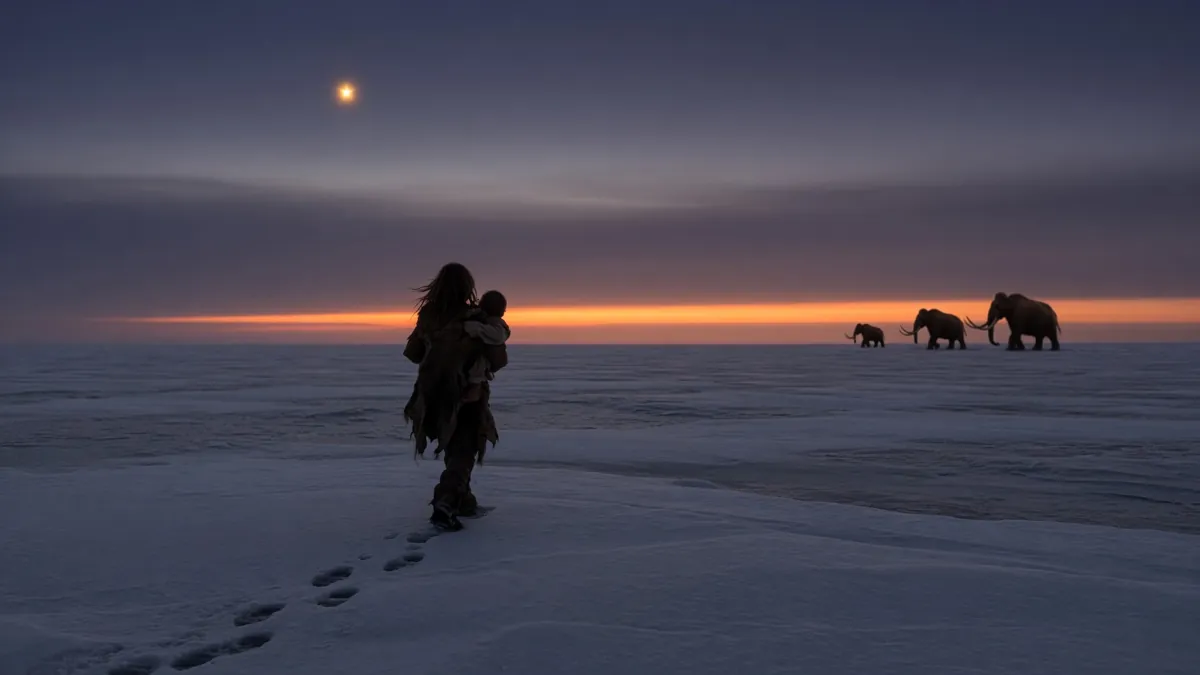
Around twelve thousand nine hundred years ago, North America looked like it was finally leaving the Ice Age. Glaciers were pulling back. Grasslands opened. Clovis hunters tracked mammoths with fluted stone points. Then the climate reversed. For more than a thousand years, northern temperatures plunged again — a chill scientists call the Younger Dryas, named for an Arctic flower that suddenly reappears in late-glacial mud.
In that same window, many of North America’s great Ice Age mammals vanish from the fossil record, and the classic Clovis toolkit fades. The question that still splits researchers is not whether the cold happened. It is what slammed the brakes on warming.

What we know for sure: an abrupt cold snap
Greenland ice cores, lake sediments, and pollen records agree that the Younger Dryas was a real, abrupt climate event near the end of the last glacial period. After a stretch of deglacial warming, the north snapped back into stadial cold for roughly twelve centuries before Holocene warmth returned. That part is not fringe science.
The leading physical story for decades has been freshwater. Meltwater from the collapsing Laurentide ice sheet can freshen the North Atlantic and weaken the Atlantic overturning circulation that carries heat northward. Stack human hunting on animals already stressed by climate, and you have a familiar textbook explanation for both the chill and the megafaunal crash.
The 2007 comet hypothesis
In 2007, Richard Firestone, Allen West, James Kennett, and colleagues proposed a sharper trigger in PNAS: a comet or extraterrestrial debris swarm around 12,900 years ago. They pointed to a dark organic “black mat” at many Clovis sites, plus claimed magnetic grains, melted spherules, nanodiamonds, and related markers they read as impact or airburst debris rather than ordinary wildfire ash alone.
Later work highlighted platinum anomalies — including a much-cited Greenland ice-core platinum spike near Younger Dryas onset (Petaev et al., 2013) — and arguments for widespread biomass burning. If that reading is correct, the Ice Age did not gently fade. A cosmic pulse may have darkened skies, ignited fires, and helped tip an already fragile climate system.
Why many scientists still say “not proven”
Critics answered quickly and hard. Reviews associated with researchers such as Vance Holliday, David Meltzer, Nicholas Pinter, and others argued that purported markers can be misidentified, contaminated, or produced by non-cosmic processes; that dates do not lock every site to one weekend; that a consensus crater of the right age and size is still missing; and that megafaunal extinctions are messier and more time-transgressive than a single continental kill-shot allows.
The black mat itself can form from wet meadows, algae, and ponding after Clovis — not only from cosmic soot. Replication fights followed: some labs reported platinum or nanodiamond peaks; others could not reproduce clean matching results. Impact defenders replied with airburst-swarm models (no classic crater required), more candidate sites, and updated geochemistry. The argument is still live.
What Echoes of Dawn will not claim
A debated impact layer is not a portal to lost ice-age super-civilizations or aliens. The honest file is simpler and stranger enough: the Younger Dryas cooling is real; Clovis and megafauna turnovers are real; meltwater and ocean slowdown remain serious; a comet weekend as the master key remains contested science.
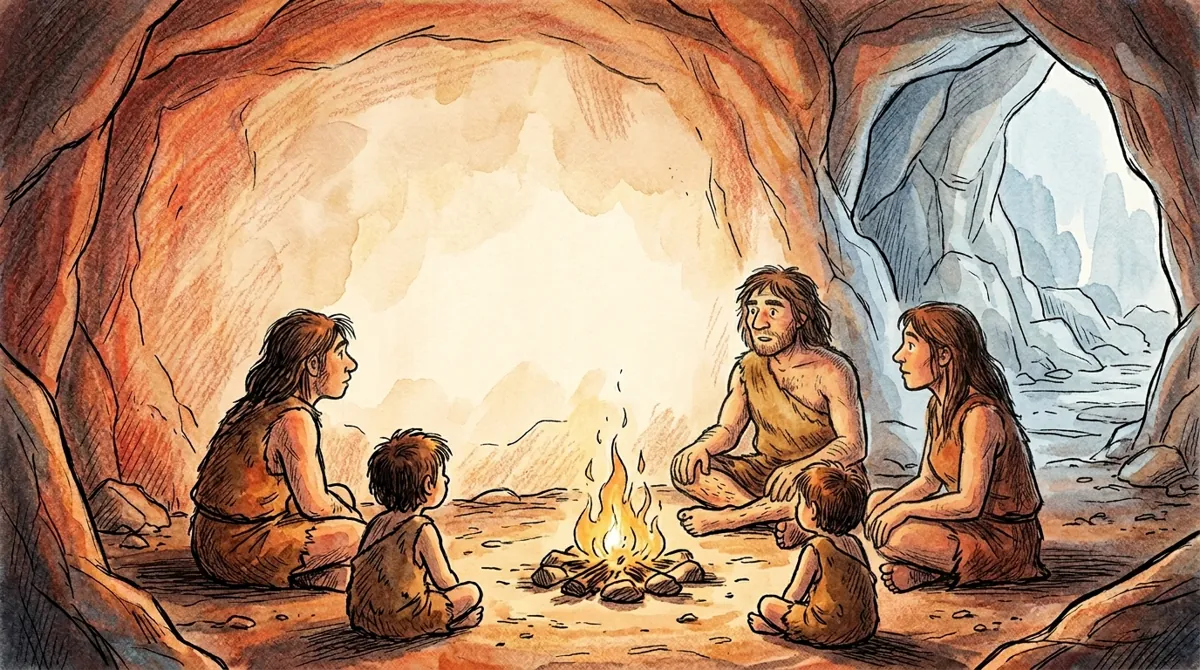
For the people on the ground, the cause mattered less than the weather. Winters lengthened. Prey thinned. Toolkits changed. On the far side of that cold snap, the Holocene world of farming and villages begins to take shape. The last Ice Age did not simply melt away — and we are still testing whether part of the key was cosmic.