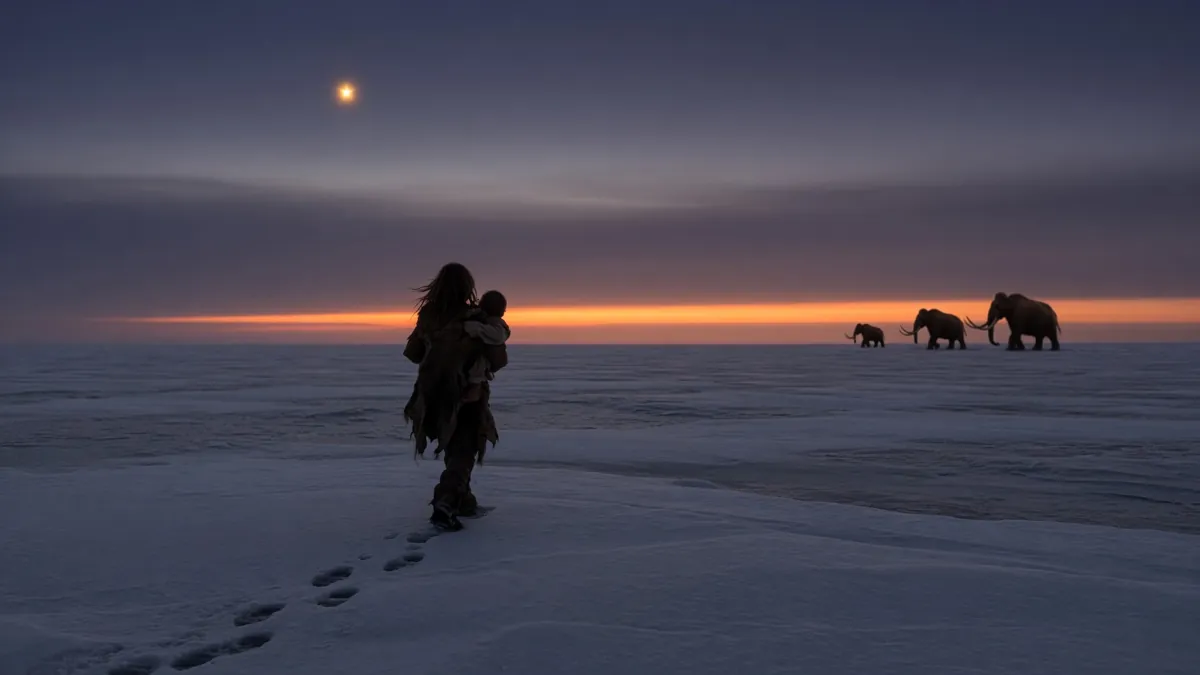
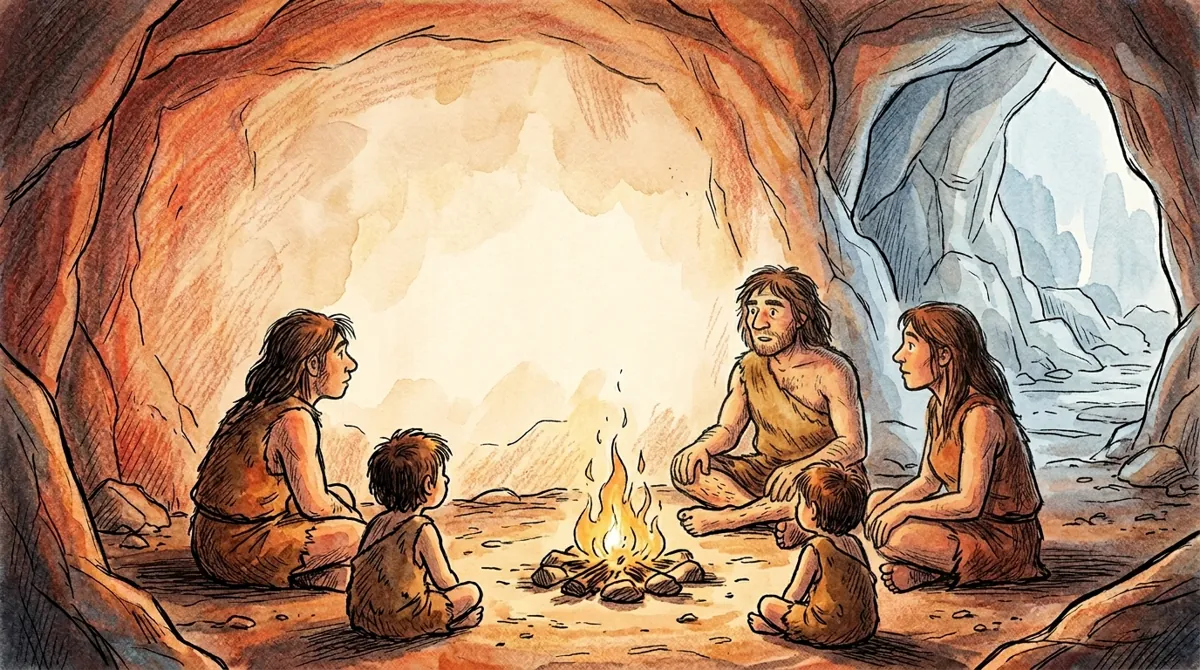
Imagine stepping back 11,500 years into the past. Outside the limestone karst mountains of Southwest China, the Ice Age is coming to an end. Early modern humans are beginning to manufacture the world's oldest pottery, domesticate wild rice, and build stone sanctuaries. Standard history textbooks teach that by this time, Homo sapiens was completely alone on Earth.
Except inside a deep cave called Maludong — the Red Deer Cave — in the highlands of Yunnan, China.
The Impossible Anatomy: Archaic Skull and Primitive Femur
Excavated initially in 1989 at Maludong and in 1979 at Longlin Cave in Guangxi, the fossils were analyzed by an international team of paleoanthropologists led by Dr. Darren Curnoe and Dr. Ji Xueping. Every known Homo sapiens fossil from 11,000 years ago features delicate facial bones, a high forehead, and a prominent chin. The Red Deer Cave fossils featured flat, broad faces, thick brow ridges, short braincases, large molars, and a complete absence of a chin.
In 2015, analysis of the Maludong 1504 thigh bone revealed an even bigger shock: the partial femur belonged to an individual weighing just 50 kg (110 lbs) whose thick bone wall and narrow marrow cavity structurally matched 1.5-million-year-old Homo habilis and Homo erectus.
Master Cave-Dwellers and Big-Game Hunters
Despite their archaic anatomy, evidence inside Maludong proves these hominins were sophisticated cave dwellers. Excavations revealed structured hearths filled with ash and charcoal, stone scrapers, and thousands of charred bones belonging to an extinct species of giant red deer (Cervus elaphus).
The butchery marks proved they carried full deer carcasses into the cave, stripped the meat, cracked long bones for marrow, and cooked meat over open fires while modern humans outside the mountain valleys were transitioning toward agriculture.
The 2022 Ancient DNA Sequencing Breakthrough
For a decade, scientists debated whether the Red Deer Cave People were an unclassified new species of Homo, late-surviving Homo erectus, or hybrids resulting from interbreeding between modern humans and Denisovans.
In July 2022, a study published in Cell led by Dr. Zhang Xiaoming successfully sequenced ancient mitochondrial DNA from the Mengzi 1 skull. Maternally, the individual belonged to haplogroup M9, an ancient branch of Homo sapiens linked to early Ice Age East Asians who crossed the Bering land bridge into the Americas. However, their bizarre physical morphology and primitive long bones continue to suggest significant nuclear hybridization with an unmapped archaic ghost lineage.
The Final Twilight of Prehistoric Hominin Diversity
Around 11,500 years ago, as the Younger Dryas climate transition disrupted ecosystems across Asia, the Red Deer Cave People vanished. They were likely the very last archaic-looking human population to walk the Earth, proving that for 99% of human history, sharing the planet with alternative human species was the norm rather than the exception.