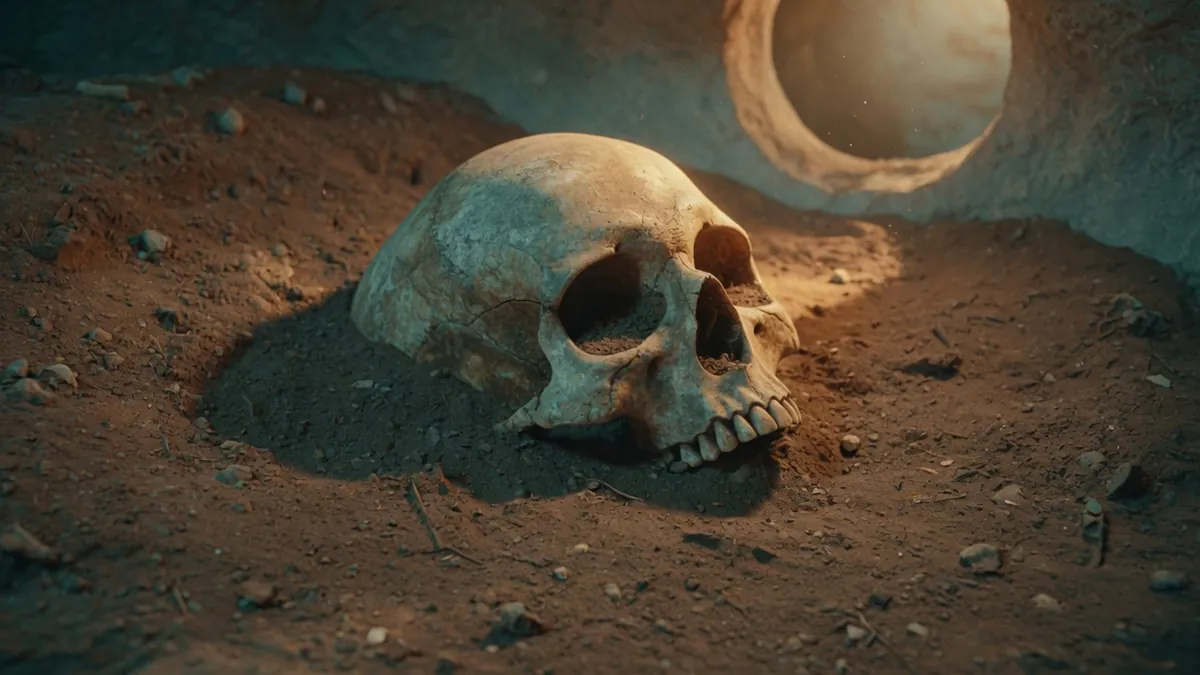
If you look around you today, every single human you see belongs to the exact same species: Homo sapiens. In the context of evolutionary history, this absolute uniformity is a bizarre anomaly. For almost two million years, biological diversity among hominins was the norm. Multiple human species walked the same continents, breathed the same air, and in some cases, lived just a few hundred kilometers apart.
Yet today, we are entirely alone. The other human species did not just disappear; they went extinct in a geological blink of an eye. Understanding how we became the last humans on Earth requires looking past the standard myths of simple climate change and exploring a complex story of competitive replacement, social networking, and genetic absorption.
The Age of Hominin Diversity
To grasp what has been lost, we have to look back roughly fifty thousand years. At that time, Earth was home to at least six, and possibly nine, different human species:
- Homo neanderthalensis: Stocky, muscular cold-weather specialists who occupied Europe and Western Asia. They possessed brains slightly larger than ours and buried their dead.
- Denisovans: A mysterious sister group to Neanderthals in Asia, known for their sophisticated craftsmanship and adaptations to high altitudes.
- Homo erectus: The marathon runners of human history, who survived in East Asia for nearly two million years.
- Homo floresiensis: The "Hobbit" species of the Indonesian island of Flores, standing only one meter tall with a brain the size of a grapefruit.
- Homo luzonensis: A unique island hominin in the Philippines adapted to climbing trees.
- Homo sapiens: A slender, behaviorally flexible species originating in Africa.
By forty thousand years ago, almost all of these species had vanished. The timing of their disappearances matches a consistent, troubling pattern. As archaeologist John Shea of Stony Brook University points out, the arrival of Homo sapiens in a new territory is consistently followed by the rapid extinction of the local hominin species.
| Species | Region | Extinction Window | Sapiens Arrival |
|---|---|---|---|
| Homo neanderthalensis | Europe / West Asia | ~40,000 years ago | ~45,000 years ago |
| Homo erectus | East Asia | ~108,000 years ago (Java) | ~120,000 years ago (SE Asia) |
| Homo floresiensis | Flores (Indonesia) | ~50,000 years ago | ~46,000 years ago (Region) |
Competitive Replacement and the Network Advantage
If Neanderthals were stronger, and erectus was more resilient, why did we win? The answer lies not in individual brainpower, but in our capacity for large-scale social cooperation.
Anthropologist Robin Dunbar has demonstrated that primate group sizes are limited by the size of the neocortex. For Neanderthals, social groups likely topped out at around fifteen individuals. They lived in small, isolated family bands, which made them vulnerable to inbreeding and environmental shocks.
Homo sapiens, through the development of symbolic language, myths, and shared narratives, could organize groups of 150 or more. This is Dunbar’s Number. Sapiens did not need to be individually smarter; we network-engineered our survival. We established trade routes spanning thousands of kilometers, shared tool-making techniques between groups, and formed regional alliances. When resource competition intensified during the last Ice Age, groups of 150 cooperating Sapiens easily displaced bands of fifteen Neanderthals.
The Hybrid Legacy: We Did Not Just Replace, We Merged
However, the story of their disappearance is not a simple tale of violent replacement. In 2010, geneticist Svante Pääbo and his team at the Max Planck Institute sequenced the Neanderthal genome from ancient bones. The results transformed our understanding of human origins: non-African modern humans carry between one and four percent Neanderthal DNA.
We did not just drive them to extinction; we interbred with them. Similarly, Denisovan DNA makes up five to six percent of the genome of modern Melanesian, Australian Aboriginal, and Southeast Asian populations. In West Africa, genetic models detect signatures of an unknown "ghost hominin" lineage that interbred with early Sapiens.
This genetic mixing was highly adaptive. Sapiens inherited vital immune defenses (HLA genes) that Neanderthals had spent hundreds of thousands of years developing in Europe. In Tibet, the genetic adaptation that allows humans to thrive in high-altitude, low-oxygen conditions—the EPAS1 gene—was inherited directly from Denisovans.
The Fragility of a Hominin Monoculture
We are the last survivors of a rich hominin tree. While our ability to cooperate at scale allowed us to out-compete our relatives, it has left us in a risky biological position. For the first time in two million years, humanity exists as a genetic monoculture. As we navigate the environmental challenges of the modern era, we carry the genetic echoes of the Neanderthals and Denisovans—reminders that we were once part of a diverse family, and that survival is never guaranteed.
References
- Green, R. E., Pääbo, S., et al. (2010). *A draft sequence of the Neandertal genome.* **Science**, 328(5979), 710-722.
- Dunbar, R. I. (1992). *Neocortex size as a constraint on group size in primates.* **Journal of Human Evolution**, 22(6), 469-493.
- Stringer, C. (2012). *Lone Survivors: How We Became the Only Humans on Earth.* **Times Books**.
- Rizal, Y., et al. (2020). *Last appearance of Homo erectus at Ngandong, Java, 117,000–108,000 years ago.* **Nature**, 577(7790), 381-385.