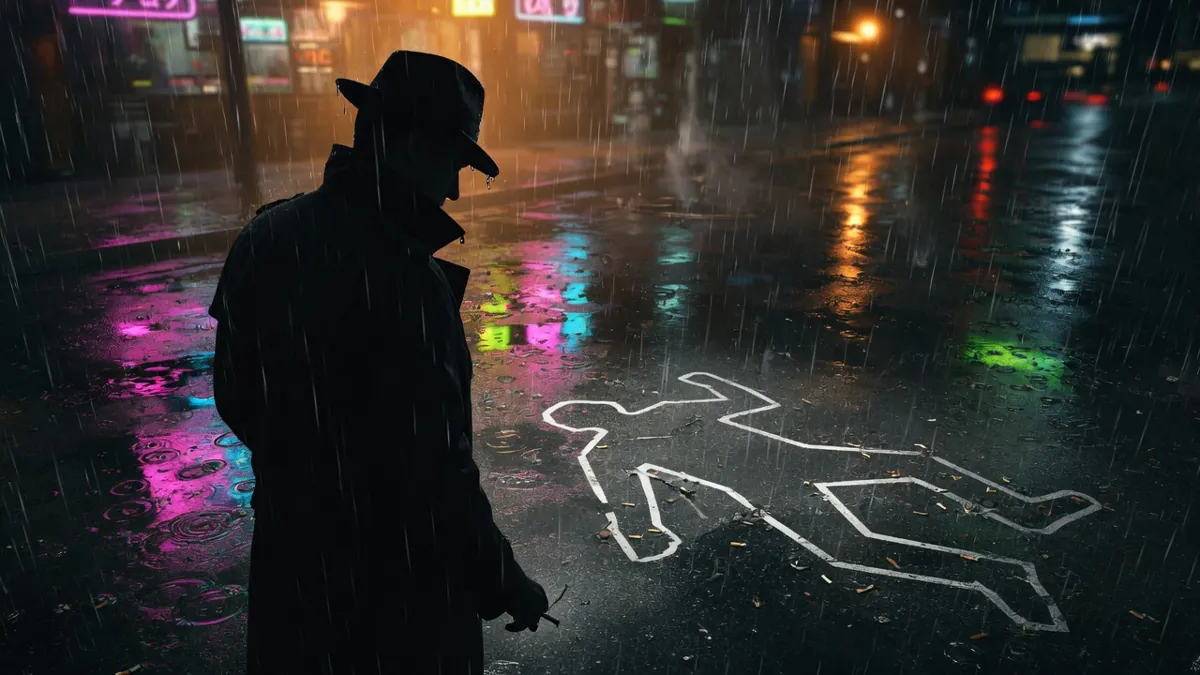
Imagine a modern crime scene. A billionaire lies dead on the street, shot from behind. The hitman has taken the spent bullet casing to hide their tracks, leaving no fingerprints. But resting on the victim’s wrist is a gold Rolex, and in his pocket is ten thousand dollars in cash. The killer didn’t touch them; they just walked away, leaving a fortune behind on the pavement. It makes absolutely no sense. But it is exactly what happened five thousand, three hundred years ago in the frozen Alps. This is the story of the oldest unsolved cold case in human history—and the mystery of the weapon that shouldn't exist.
The Glacier Mummy that turned into a Crime Scene
In 1991, hikers in the Alps found a body half-frozen into the glacier, face down. At first, everyone assumed it was a lost climber who had died a few seasons prior. But they were wrong by more than fifty centuries. This was a man from the Copper Age, whom we now call Ötzi the Iceman. Because the ice preserved him perfectly, he is a biological time machine. We know his height, his blood type, his eye color, and even that he was lactose intolerant. But for ten years, scientists believed he simply got lost in a blizzard and froze to death.
Then, an X-ray in 2001 changed everything. Deep in his left shoulder was a stone arrowhead. Someone had shot him in the back, severing a major artery. He would have bled to death in less than ten minutes. This mummy was now a homicide. And the clues on his body began to tell a terrifying story.
The Axe that originated 500 Kilometers away
Ötzi was carrying a tool that shouldn't have existed in his world: an axe hafted with yew wood, secured with leather thongs, and sealed with birch tar. But the blade was the real shock. It was made of 99.7% pure copper. In his time, this axe was the ultimate status symbol—the equivalent of a modern supercar. Only a leader, a shaman, or a warrior of incredible status could possess such an object.
For decades, researchers assumed the axe was cast from copper mined nearby in the Alps. But in 2017, scientists conducted a lead isotope analysis on the metal. The results were jaw-dropping: the copper didn't come from the Alps. It came from southern Tuscany, over five00 kilometers (300 miles) to the south. This single tool proved the existence of massive, long-distance trade routes crossing the Alps 5,300 years ago.
The Crime Scene Paradox
But this discovery deepened the murder mystery. Why would a killer leave this priceless weapon behind? If the motive was robbery, the axe would have been the very first thing the killer took. Leaving it is like a modern thief leaving a Rolex on a victim. It suggests a personal motive. Perhaps the axe was too famous; to carry it would immediately mark you as the killer. Or perhaps the murder was an execution, and taking the victim’s weapon was strictly forbidden.
To find the truth, scientists looked closer at the physical clues. They found a deep, unhealed cut on his right hand, between his thumb and index finger—a classic defensive wound from a hand-to-hand fight that happened 24 to 48 hours before his death. More shockingly, DNA analysis of his gear revealed traces of blood from four different people: one on his knife, two on a single arrow, and one on his coat. This indicates Ötzi had shot two people, retrieved his arrow, and carried a wounded ally. He was caught in a running, multi-day tribal war.
The Last Meal and the Hitman's Escape
By analyzing the pollen in his gut, scientists reconstructed his final journey. He was in the valley, climbed up to the high pass, went back down, and climbed again. He was running. Exhausted, wounded, and bleeding, he made one last push into the high peaks. At over three thousand meters, he finally stopped to rest and ate a heavy meal of dried ibex fat, red deer, and einkorn wheat, believing he was safe.
He was wrong. The killer was waiting. Struck from behind by the arrow, Ötzi collapsed. As he lay dying, the killer approached, dealt a massive blow to his head, and then did something highly calculating: they snapped the wooden arrow shaft, pulling it out of the wound and leaving only the flint tip inside. The shaft was carved with unique tribal markings that could trace the weapon back to the killer. But they left the copper axe—a silent, shining witness to the crime.
Sources and further reading
- Artioli, G., Angelini, I., et al. (2017) — "Long-distance trade in the Copper Age: New insights from the metallurgical analysis of the Iceman’s copper axe." PLOS ONE, 12(7), e0180290.
- Nerlich, A. G., et al. (2003) — "Ötzi’s last hours: Reconstruction of the events leading to his death." The Lancet, 362(9380), 327-328.
- Loy, T. H. (2003) — "DNA profiling of blood residues on the gear of the Tyrolean Iceman." Journal of Archaeological Science, 30(8), 981-986.
- Gostner, P., & Vigl, E. E. (2002) — "Insight: Report of the radiological investigation on the Iceman." Journal of Archaeological Science, 29(3), 323-326.
Echoes of Dawn — the story of us, before history was written. Watch the episode and subscribe.