In 1991, two hikers crossing a high pass in the Alps found a body half-frozen into the glacier. They assumed it was a mountaineer who had died a few seasons earlier, and they called the authorities. They were wrong by about 5,300 years. The man in the ice was no lost climber. He was the oldest murder victim ever found, and the ice had preserved not just his body but his clothes, his tools, his weapons, his final meal, and the secret of how he died. We call him Ötzi, the Iceman, and he is the closest thing we have to a time machine into the Copper Age.
A real human being, frozen with his life
Ötzi was found at around 3,200 metres in the Ötztal Alps, on the modern border between Austria and Italy — which is where his nickname comes from. In life he was about 45 years old, genuinely old for his era, around a metre and a half tall, with brown eyes and blood type O. His DNA shows he was lactose intolerant, like most people of his time, and his body carried worn joints, hardened arteries, and an intestinal parasite. He was, in other words, a real middle-aged man, not a textbook diagram.
And he came superbly equipped. He carried a yew longbow, a quiver of arrows, a flint dagger, and a fire-starting kit; he wore a stitched hide coat, a woven grass cloak, a bearskin cap, and shoes stuffed with grass for warmth. But one object rewrote what we thought we knew about his world: an axe with a blade of almost pure copper, about 99.7% pure. Copper that fine marked him as a person of some status. This was not a poor man.
The X-ray that turned a mummy into a crime scene
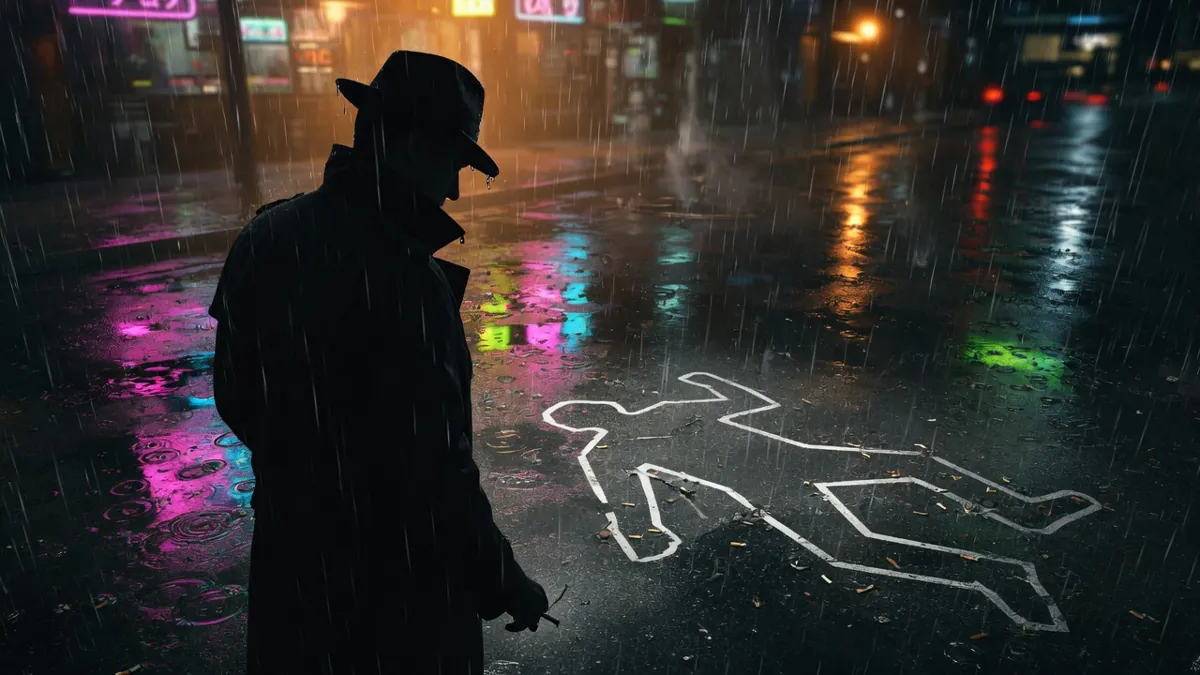
For a decade, the assumption was simple and sad: he lay down exhausted in the snow and froze. Then, in 2001, a new X-ray found a stone arrowhead buried in his left shoulder. Someone had shot Ötzi in the back, and the arrow had torn through a major artery beneath his collarbone — a wound that would have killed him within minutes. Once investigators knew to look, the clues multiplied. He had a deep, unhealed defensive cut across his right hand, the kind you get grabbing a blade in a fight, from a few days before he died. He had also taken a blow to the head near the end. The violence was not a single moment.
The last days of a man on the run
Scientists then did something remarkable: they reconstructed his final days. Pollen trapped in his gut records the altitudes he passed through, and it traces a frantic path — up the mountain, down into the valley, and up again — over roughly his last two days. This was not a leisurely hike; it reads like a flight. We even know his last meals almost to the hour: dried ibex and red deer with einkorn wheat and a few ferns. His stomach was still full, meaning he ate a heavy meal barely an hour before he was killed. Perhaps he thought he had finally lost his pursuer. He was wrong.
The arrow came from below and behind — an ambush on the open pass. And here is the detail that still haunts investigators: whoever killed him pulled the arrow shaft back out, leaving only the stone tip inside, perhaps because the shaft could be traced to them. Yet they did not take his valuable copper axe. This was no robbery. Someone wanted Ötzi dead and then walked away covering their tracks, and the motive is still unknown.
Sixty-one tattoos and a face from the deep past
The Iceman had one more secret, written on his skin: 61 tattoos of simple lines and crosses. They were not punctured with a needle — fine cuts were rubbed with charcoal — and they cluster on his joints and lower back, precisely where his bones were worn and would have ached. Many researchers think they were medical, a Stone Age pain treatment thousands of years before acupuncture. They are the oldest tattoos ever found on a human body.
Today Ötzi may be the most studied human in history. His entire genome has been read, revealing his ancestry and even his appearance; researchers have identified the bacteria in his stomach and found surprising clues about where his people came from. He even has living relatives — at least 19 men in Austria share his genetic line. A man who died fleeing for his life is connected, by blood, to people walking around today. Fifty-three centuries later, he is still talking to us. He has told us how he lived, what he wore, what he ate, and that he was murdered. The only thing he will not give us is the name of who did it.
Sources and further reading
- South Tyrol Museum of Archaeology (iceman.it) — the body, equipment and official findings.
- Reporting on the 2001 arrowhead discovery and the severed subclavian artery as cause of death.
- National Geographic — reconstruction of Ötzi's final climb from gut pollen and altitude.
- Ancient-DNA studies — genome, brown eyes, blood type O, lactose intolerance, and the 19 living Austrian relatives.
- Smithsonian Magazine — the murdered Iceman and the making of his tattoos.
Note: the killer's motive and the exact order of the final fight are interpretations of the forensic evidence, and the "about an hour before death" timing is an estimate; they are presented here as the leading reconstruction, not as settled fact. The case remains unsolved.
Echoes of Dawn — the story of us, before history was written. Watch the episode and subscribe.