There are eight billion of us, and we tend to imagine we were always the only humans on Earth. We were not. For most of our history we shared the planet with other kinds of people, and one of them was discovered in the strangest way imaginable: from a single fingertip.
They are called the Denisovans, and for fifteen years science had an entire human species with almost no idea what their faces looked like. This is the story of the ghost relative whose DNA still lives inside millions of people today.
A new human, from a finger bone
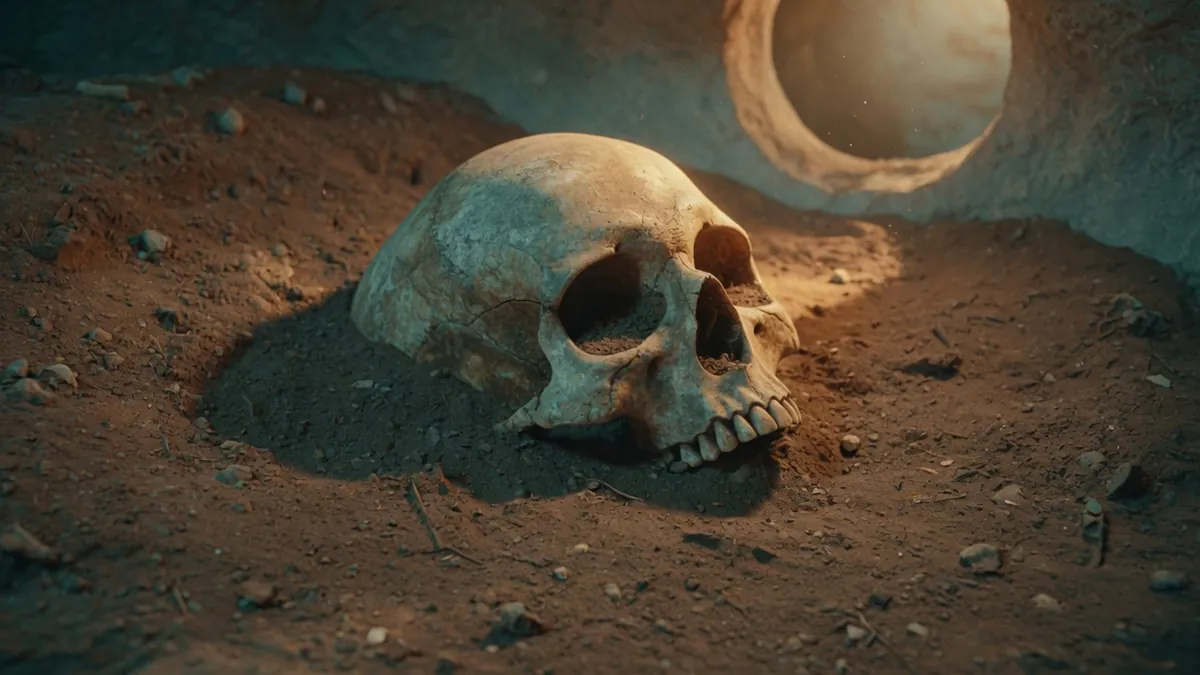
In a cold cave called Denisova in southern Siberia, researchers recovered a tiny fragment of finger bone. When they sequenced the DNA inside it, the result was astonishing: it belonged to neither a modern human nor a Neanderthal, but to a third kind of human, previously unknown to science. An entire branch of our family had been hiding in a scrap of bone.
A wide, vanished world
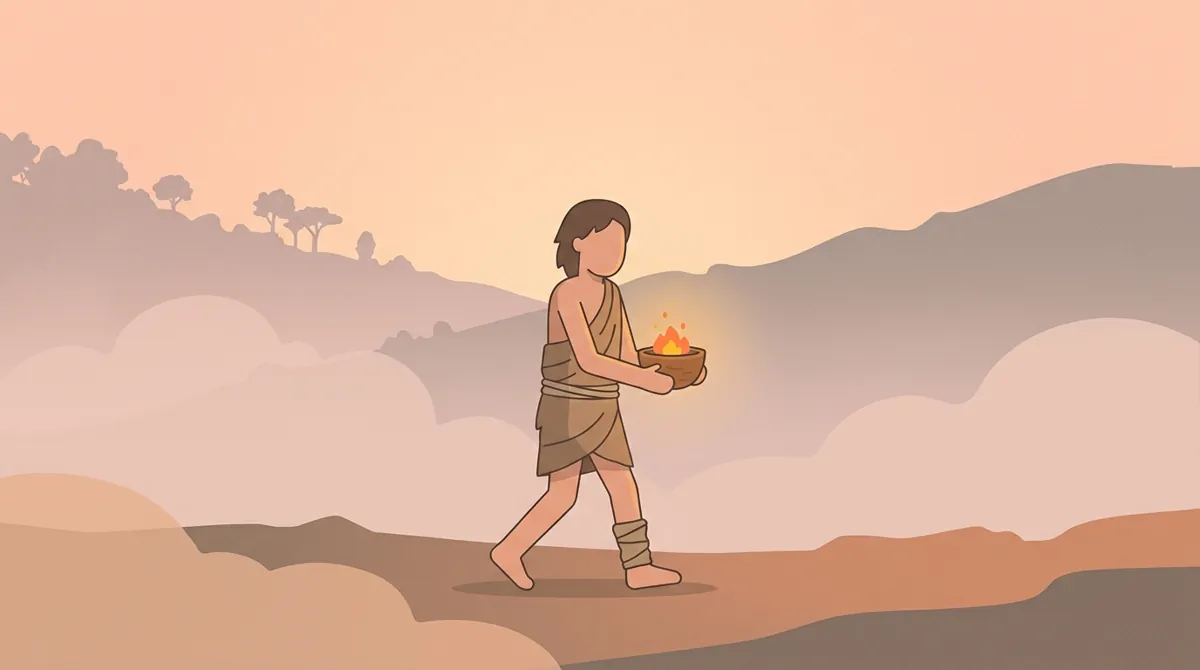
From a handful of bones and teeth, and from genetics, researchers pieced together a people who ranged across a vast stretch of Asia, from Siberia to the high Tibetan Plateau to the warm forests of Southeast Asia. They were not a footnote; they were a successful human population for a very long time.
They live on in us
Denisovans met modern humans and had children with them. Today, people across Asia, Oceania and the Pacific carry Denisovan DNA. One inherited gene variant (EPAS1) appears to help some Tibetans cope with the thin air of extreme altitude: a gift from a vanished human, helping people thrive on the roof of the world. And in the same Siberian cave, a girl nicknamed Denny turned out to be the first-generation child of a Neanderthal mother and a Denisovan father, proof that these worlds did not just pass each other by. They mixed.
The ghost gets a face
For years the frustration was simple: we had their code but not their face. Then attention turned to a massive, long-misunderstood skull from China, nicknamed Dragon Man. Recent molecular analysis linked it to the Denisovan lineage, and after fifteen years the ghost finally had a face: broad, strong, and unmistakably human. We are not the lonely main character of the human story. We are one surviving branch of a wide, tangled family, and some of our relatives never entirely disappeared.
Sources & further reading
- Krause, J. et al. (2010). "The complete mitochondrial DNA genome of an unknown hominin from southern Siberia." Nature 464, 894–897.
- Reich, D. et al. (2010). "Genetic history of an archaic hominin group from Denisova Cave in Siberia." Nature 468, 1053–1060.
- Huerta-Sánchez, E. et al. (2014). "Altitude adaptation in Tibetans caused by introgression of Denisovan-like DNA." Nature 512 (EPAS1).
- Slon, V. et al. (2018). "The genome of the offspring of a Neanderthal mother and a Denisovan father." Nature 561, 113–116 ('Denny').
- Chen, F. et al. (2019). Xiahe mandible: a Denisovan on the Tibetan Plateau. Nature 569.
- 2025 molecular analyses linking the Harbin 'Dragon Man' cranium to the Denisovan lineage (Cell / Science, 2025).
Denisovan range, population size and appearance are reconstructed from limited fossils and DNA and remain an active research area; the Dragon Man link and the timing of interbreeding are recent and still discussed. Archaic humans are treated here as kin.
Echoes of Dawn — the story of us, before history was written. Watch the episode and subscribe.