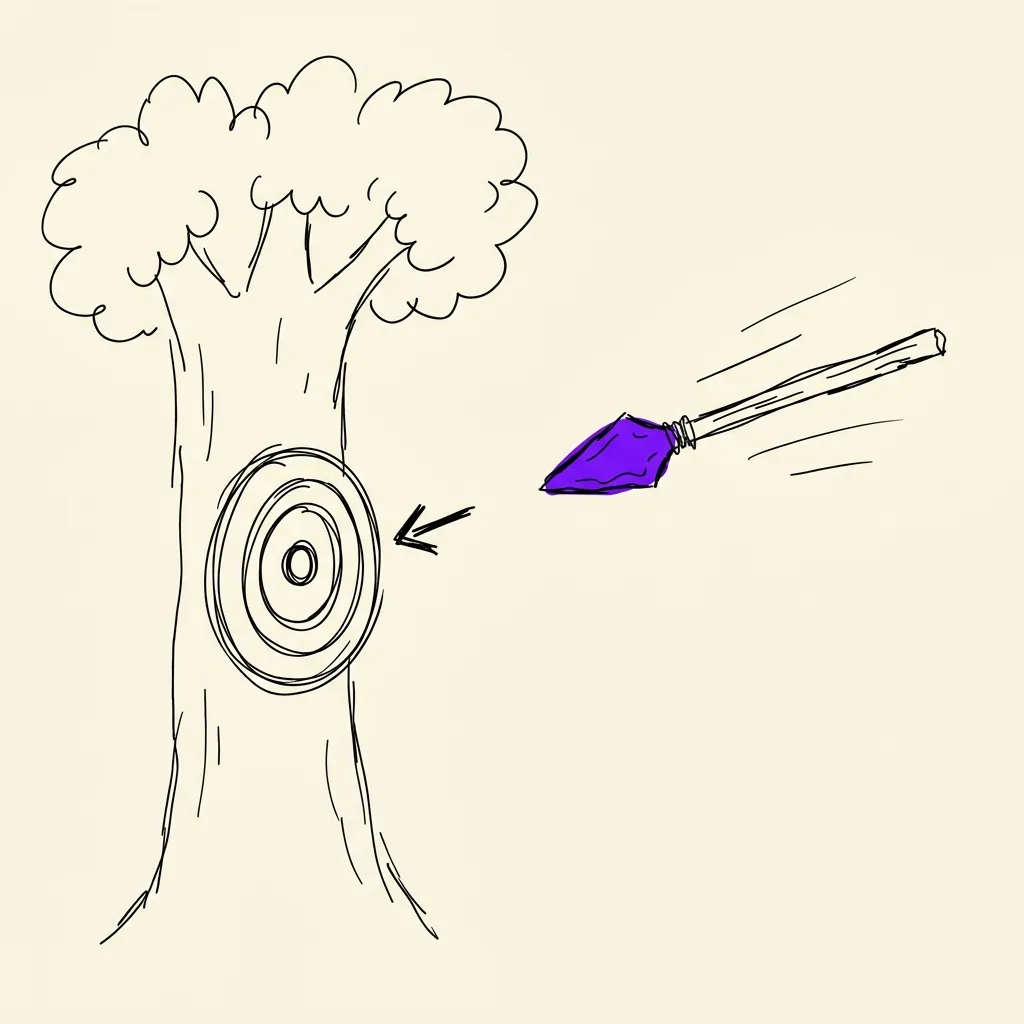
Prehistoric Weapons: They ACTUALLY WORKED?! How Physics and Chemistry Fueled Early Human Survival
When you picture a prehistoric weapon, what comes to mind? A simple, heavy wooden club swung by a hairy, grunting caveman? Or perhaps a crude rock crudely tied to a stick with strips of animal hide? We have been taught to see our ancient ancestors as primitive, relying on brute force and luck to survive. But the archaeological record tells a completely different story. The weapons of our ancestors were not crude makeshifts; they were highly engineered masterpieces of physics, aerodynamics, and organic chemistry.
From the dense forests of Pleistocene Europe to the caves of South Africa, early humans and Neanderthals did not survive by getting close to massive prey for dangerous melee combat. Doing so was a death sentence. Instead, they defeated their environments with advanced ballistics and mechanical force multipliers, solving complex survival challenges long before the formal laws of physics were ever written down.
The Aerodynamics of Neanderthal Javelins
For decades, scholars assumed that Neanderthals were simple thrusting hunters who had to ambush large prey at point-blank range. This view was shattered in 1994 when German archaeologist Hartmut Thieme discovered nine wooden spears preserved in the ancient mud of a coal mine in **Schöningen**, Germany. Dating back three hundred thousand years, these spruce wood spears are the oldest complete throwing weapons ever found.
When engineers analyzed the Schöningen spears, they found a shocking level of craftsmanship. The spruce shafts were carved with a very specific, deliberate taper. The thickest part of the spear was not in the middle, but shifted to the front third of the shaft. By putting more weight forward, the Neanderthal craftsmen had shifted the center of gravity forward. This is the exact design of modern Olympic javelins. This precise engineering prevents the spear from wobbling in mid-air, creating a stable, aerodynamic flight path that allowed Neanderthals to accurately hit targets from twenty meters away.
The Atlatl: Humanity's First Machine
While a thrown spear was a massive upgrade, the human shoulder has natural biomechanical limits. A spear thrown by a human hand can only travel so fast and deliver a limited amount of kinetic energy. To bypass these physical limitations, early modern humans developed the **Atlatl**, or spear-thrower. Originating at least thirty thousand years ago, the atlatl is a wooden handle with a hook at the end that catches the tail of a flexible, lightweight dart.
The physics of the atlatl is simple but devastating: it artificially extends the length of the human arm. By swinging the atlatl, the hunter acts as a pivot, transforming rotational velocity into linear velocity. This lever action accelerates the dart to speeds exceeding one hundred and fifty kilometers per hour. Additionally, the atlatl dart is designed to flex in mid-air, storing potential energy like a spring and releasing it upon impact. This mechanical leverage delivered enough kinetic energy to pierce the thick hide and ribs of woolly mammoths, marking the birth of mechanical distance warfare.
| Weapon Type | Key Physics/Chemistry Principle | Effective Range | Velocity & Energy Delivery |
|---|---|---|---|
| Schöningen Spear | Forward-shifted center of gravity; aerodynamic taper | 10 - 20 meters | Throw speed limit: ~80 km/h; high impact mass. |
| Atlatl Dart | Rotational-to-linear arm extension lever; shaft flexion energy storage | 30 - 50 meters | Speeds: 150+ km/h; high kinetic energy penetration. |
| Poisoned Bow & Arrow | Elastic potential energy; organic neurotoxins (Larvae / Sap) | 20 - 40 meters | Low mechanical draw energy compensated by fatal biochemistry. |
Sibudu Cave and the Birth of Chemical Warfare
As early humans developed bows and arrows, they faced a different problem. Early bows had simple, low-draw weights. A small, lightweight arrow might hit a large bison or zebra, but it rarely had the kinetic energy to cause a quick, fatal wound. To solve this, early modern humans turned to chemistry.
Excavations at **Sibudu Cave** in South Africa, dating back seventy thousand years, revealed bone arrowheads containing traces of organic poisons and binding adhesives. Early humans harvested the highly toxic fluids from local beetle larvae and poisonous plant saps (like the Euphorbia tree). They cooked these materials into a dense paste and applied it to their arrow tips. Instead of relying on a deep, structural wound to kill, they only needed a minor scratch to introduce the neurotoxin into the prey's bloodstream. Within minutes, the animal's nervous system would fail, allowing a single hunter to safely track and bring down animals ten times their size.
Engineering Our Legacy
The next time you see a portrayal of early humans struggling on the savannas of the Pleistocene, remember that they were not survival-mode amateurs. They were ballistics engineers, chemists, and tool designers who used deep cognitive planning to build high-performance projectile networks. They solved complex natural challenges through innovation, passing down these technological legacies to lay the groundwork for the modern mechanical world.
References
- Thieme, H. (1997). *Lower Palaeolithic hunting spears from Germany.* **Nature**, 385(6619), 807-810.
- Whittaker, J. C. (2013). *Deciphering Atlatls: The Physics and Biomechanics of Prehistoric Throwing.* **Journal of Archaeological Science**, 40(12), 423-433.
- Lombard, M. (2012). *Thinking through the Bow and Arrow: Cognitive Archaeology at Sibudu Cave.* **Cambridge Archaeological Journal**, 22(2), 237-254.
- Milks, A., et al. (2019). *External ballistics of Pleistocene hand-thrown spears: experimental performance data.* **Scientific Reports**, 9(1), 1-11.