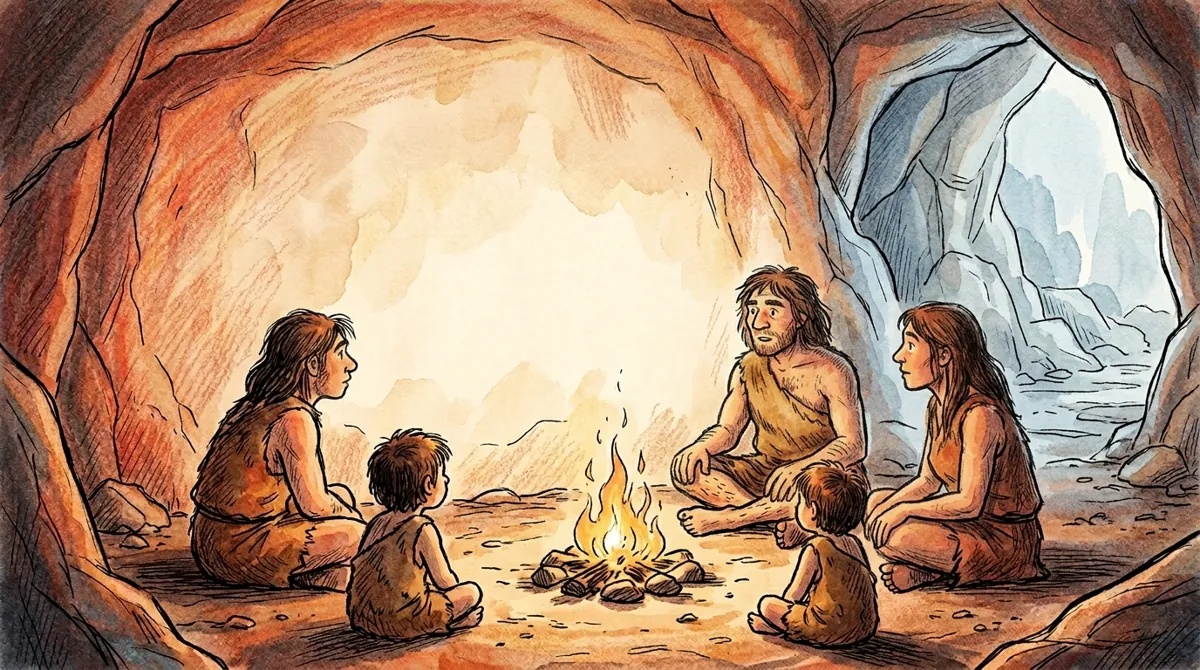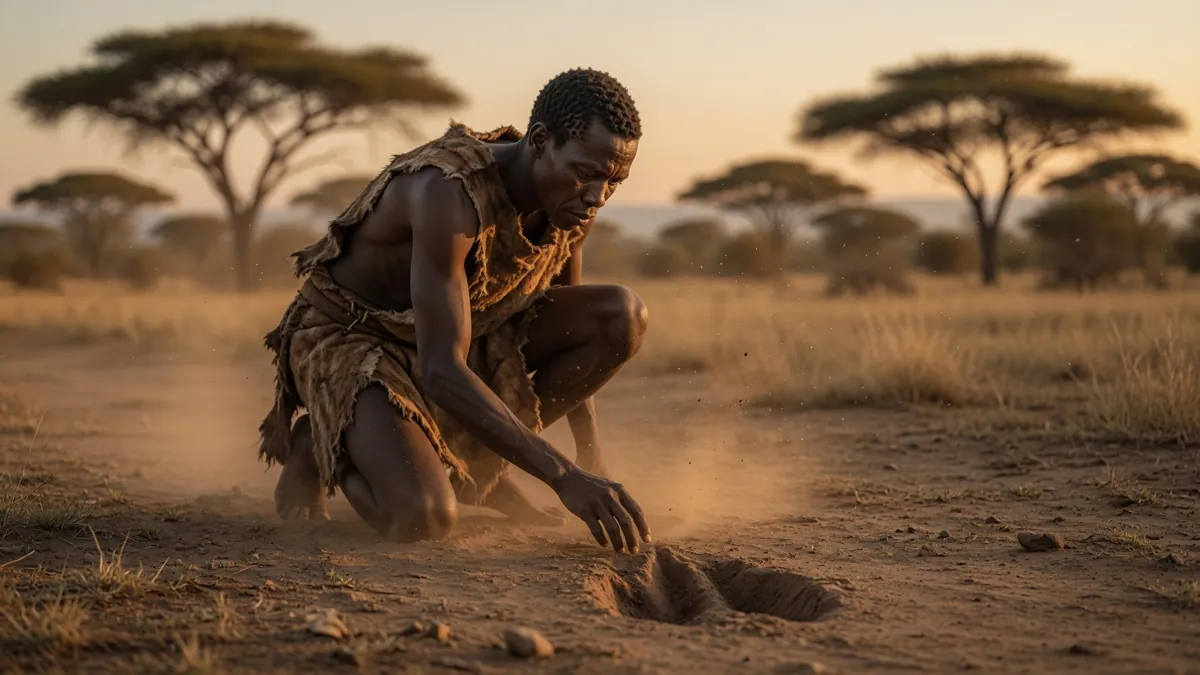
Right now, you're probably carrying some anxiety about the future. Maybe you read about a solar storm threatening the electrical grid, or the supervolcano sleeping under Yellowstone. It feels like humanity is constantly walking on a thin wire, one global disaster away from falling into the dark. Yet, seventy-four thousand years ago, our ancestors didn't just worry about the end of the world. They lived it.
When Sumatra's Mount Toba exploded in the largest volcanic eruption of the last two million years, the sky turned to a suffocating grey. For nearly a decade, global temperatures plummeted, acid rain fell, and ecosystems collapsed. Modern genetics shows that our species went through a devastating bottleneck—shrinking to a tiny, desperate band of survivors. We were an endangered species on the edge of extinction.
The Scales of the Supereruption
To understand the scale of what happened, we have to look at Sumatra, Indonesia. Today, Lake Toba is a beautiful, peaceful body of water. But seventy-four thousand years ago, it was the site of a super-volcanic explosion. Mount Toba blew twenty-eight hundred cubic kilometers of rock, ash, and toxic sulfur into the atmosphere. For comparison, the 1980 eruption of Mount St. Helens was twenty-eight thousand times smaller.
The blast sent ash plumes thirty miles into the sky, crossing the stratosphere and blocking out ninety percent of the sun's light. A thick blanket of volcanic ash settled over South Asia, parts of the Indian Ocean, and East Africa, measuring six feet deep in some regions. Volcanic modeling indicates that global temperatures plummeted by up to fifteen degrees Celsius, initiating a sudden, artificial ice age that lasted for nearly a decade.
The Genetic Scar: The Hominin Bottleneck
The physical ash wasn't the only thing Toba left behind. It left a permanent scar in our very biology. In the late 1990s, geneticists studying human mitochondrial DNA (mtDNA) noticed that modern humans have incredibly low genetic diversity. Two random chimpanzees from the same forest have more genetic differences than two random humans chosen from opposite sides of the planet.
Anthropologist Stanley Ambrose proposed that the Toba catastrophe was the cause. Genetic models show that around seventy thousand years ago, the human population went through a catastrophic bottleneck. The number of Homo sapiens plummeted from around one hundred thousand down to between one thousand and ten thousand breeding pairs. We were an endangered species, one bad winter away from vanishing forever.
| Metric | Pre-Eruption | Post-Eruption Crisis | Impact on Human Lineage |
|---|---|---|---|
| Global Hominin Population | ~100,000 active individuals | 1,000 - 10,000 breeding pairs | Severe genetic bottleneck; loss of regional genetic lineages outside of Africa. |
| Global Temperature | Stable, warm interglacial | Plummeted by 5°C - 15°C | Widespread volcanic winter; collapse of savanna vegetation and large game. |
Pinnacle Point: The Coastal Sanctuary
While the bottleneck occurred, our ancestors didn't just passively await extinction. High-resolution excavations at **Pinnacle Point**, South Africa, led by geologist Curtis Marean, show that humans thrived directly through the YTT deposition period. When the plants on the savanna died and large herbivores vanished, the survivors turned to the sea.
Marean’s team found massive heaps of shell middens, confirming that shellfish became a core part of the human diet. Limpets, mussels, and sea snails provided a stable, reliable food supply insulated from the ash-choked interior. Gathering shellfish required reading tidal cycles, which forced early humans to track lunar cycles and develop predictive mental models of astronomy.
Furthermore, their tool technology improved. They heat-treated silcrete stone in controlled hearths (pyrotechnology) to make it easier to shape into microliths—sharp, tiny blades glued to wooden shafts to create early projectile weapons. They were manipulating the molecular structure of stone to survive the volcanic winter.
The Birth of the Network Mind
Coordinating tidal harvests, managing complex fires, and defending rare coastal sanctuaries forced humans to cooperate at an unprecedented scale. They could no longer live in isolated family bands. This crisis was likely the catalyst for the explosion of symbolic communication. Archaeologists find some of the earliest evidence of symbolic art at these South African sites—pieces of engraved red ochre and perforated shells used as beads.
These were the first visual IDs, telling others who belonged to which network, who could be trusted, and who shared the same stories. When the volcanic winter cleared, the Sapiens who walked out of the South African sanctuary were technologically advanced, socially cooperative, and symbolically connected. They had built a network mind, ready to expand and populate the globe.
References
- Smith, E. I., et al. (2018). *Humans thrived in South Africa through the Toba super-eruption.* **Nature**, 555(7697), 511-515.
- Ambrose, S. H. (1998). *Late Pleistocene human population bottlenecks, volcanic winter, and differentiation of modern humans.* **Journal of Human Evolution**, 34(6), 623-651.
- Robock, A., et al. (2009). *Did the Toba volcanic eruption of ~74,000 yr BP produce widespread glaciation?* **Journal of Geophysical Research: Atmospheres**, 114(D10).
- Marean, C. W., et al. (2007). *Early human use of marine resources and pigment in the Late Pleistocene.* **Nature**, 449(7164), 905-908.