Right now, you're probably sitting in a room illuminated by stable electrical currents. A screen glows in the corner, music streams from a speaker, and the night has been effectively neutralized. To modern society, light is a default utility. Yet, for nearly ninety-nine percent of human existence, the setting sun was the boundary of human activity, plunging the world into a darkness so absolute that the landscape itself changed owners.
For roughly three hundred thousand years, half of every single day was spent in deep prehistoric night. This was not a minor inconvenience; it was half of human life. While textbooks focus on daylight activities like hunting mammoths, gathering plants, and knapping flint, the night was where some of the most critical transitions in human cognitive and social evolution took place. The night is where we became human.
The Sentinel Hypothesis: Redefining Prehistoric Sleep
When we imagine prehistoric sleep, we often picture an entire tribe retreating to a cave, sleeping soundly in an unbroken block until dawn. However, recent evolutionary anthropology reveals a far more dynamic and cooperative pattern. Anthropologist David Samson of the University of Toronto Mississauga has studied sleep architecture in traditional societies like the Hadza hunter-gatherers of Tanzania and the San of the Kalahari.
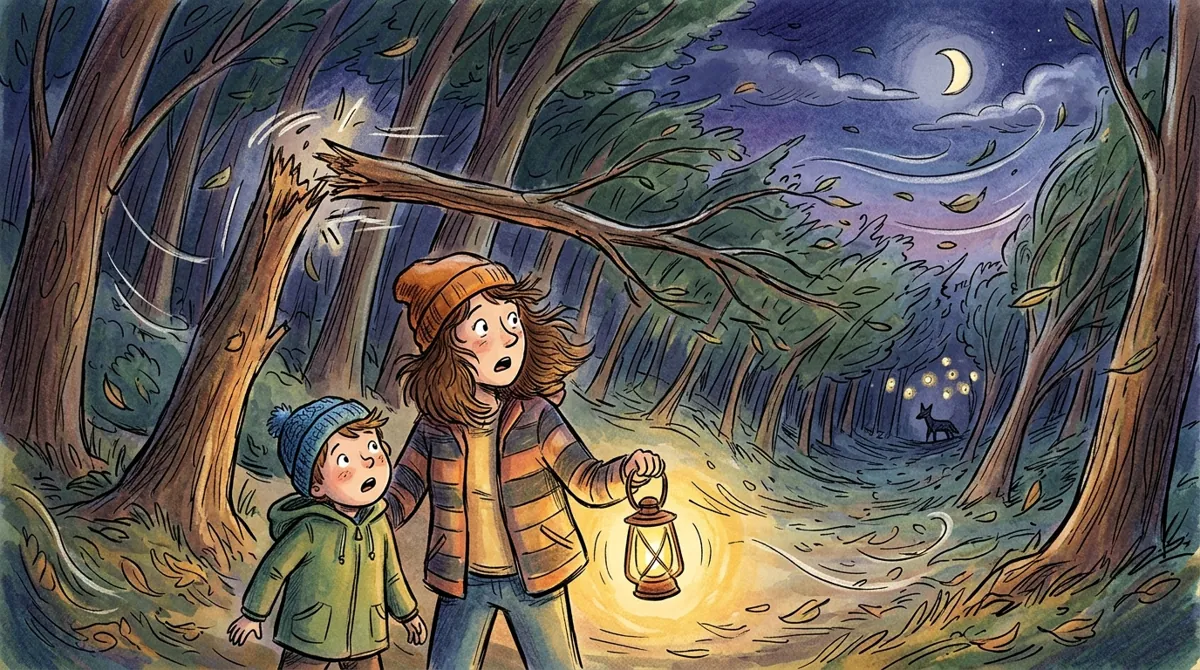
Samson’s findings indicate that natural human sleep in non-industrial conditions is not monophasic (one single block), but segmented and highly variable. Within a group, individuals fall asleep and wake up at different times. Staggering sleep schedules ensured that during any given hour of the night, at least one member of the group was alert. Samson terms this the sentinel hypothesis. In a world where leopards, hyenas, and other nocturnal predators stalked the ground, having active sentinels was a vital line of defense.
| Sleep Model | Pacing & Structure | Adaptive Benefit in Prehistory |
|---|---|---|
| Monophasic Sleep | Single 7-8 hour block, synchronized across the entire group. | Very low. Leaves the entire group completely vulnerable to nocturnal predators. |
| Sentinel (Staggered) Sleep | Segmented, overlapping sleep cycles. At least one person awake at all times. | High. Ensures continuous threat monitoring and immediate alarm response. |
The Firelit Theater: Pushing Back the Shadows
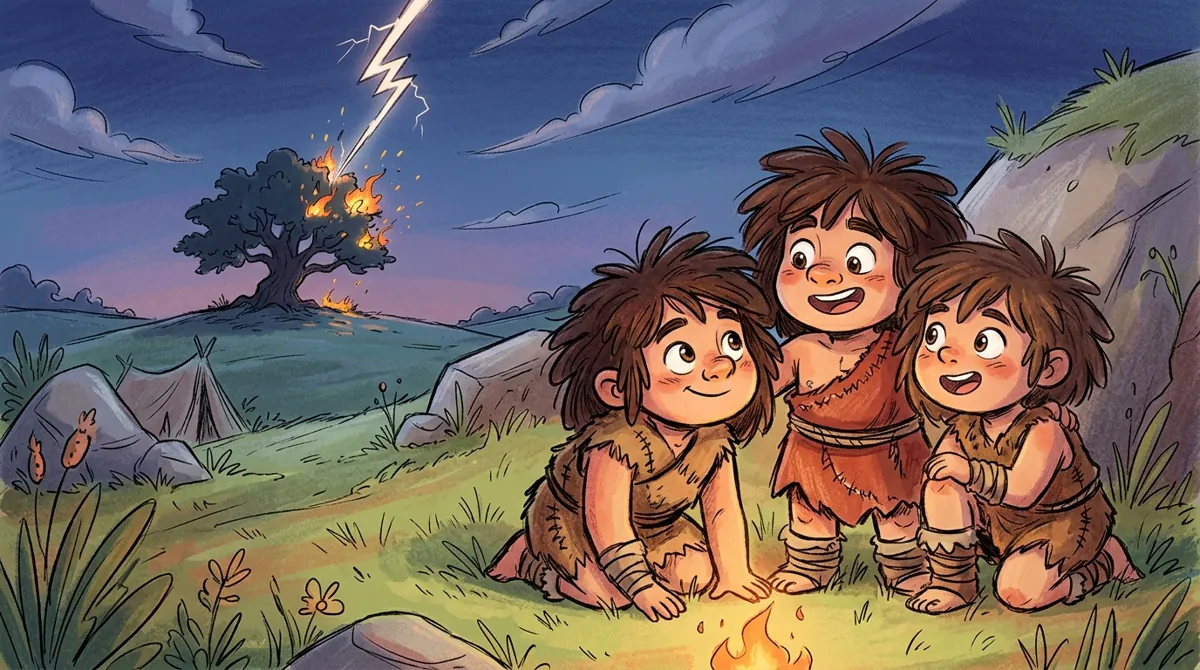
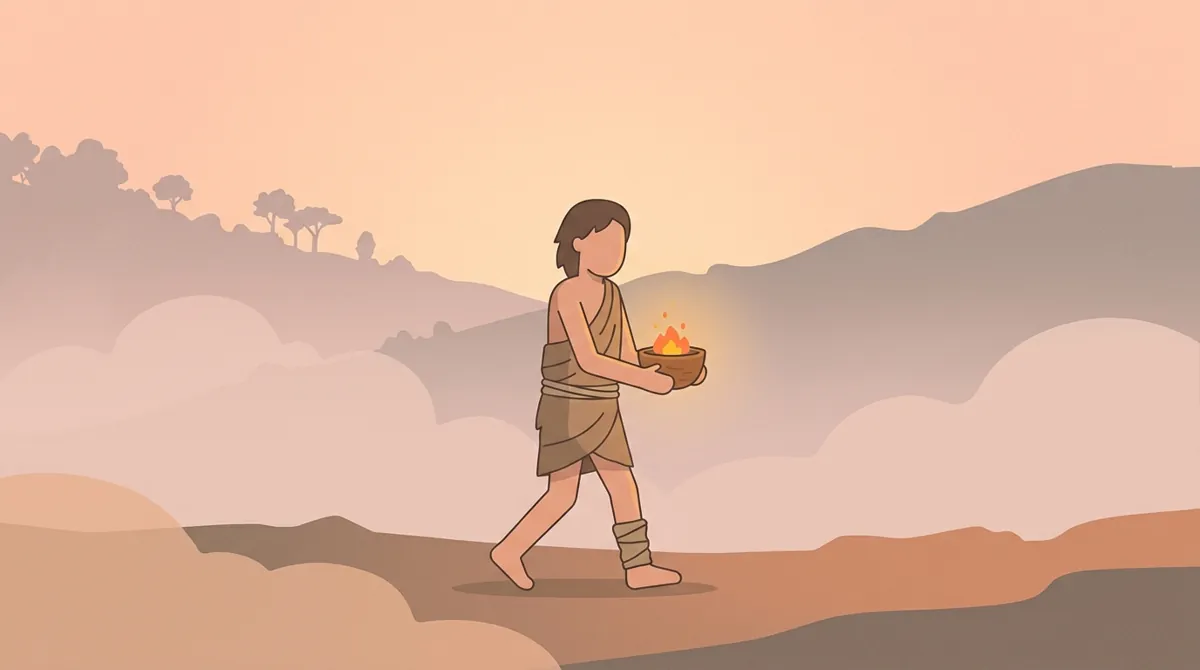
The control of fire, documented at deep-time sites such as Wonderwerk Cave in South Africa (pushing controlled fire back at least one million years) and Gesher Benot Ya'aqov in Israel, did not turn night into day. Instead, it created a fragile, glowing bubble of warmth and security, roughly three to four meters in diameter. Outside that circle lay predation; inside lay community.
In 2014, anthropologist Polly Wiessner published a landmark study analyzing over 170 hours of daytime and nighttime conversations among the Ju/'hoansi San people. The differences she documented between day and night talk were stark:
- Daytime Talk: Focused primarily on economic coordination, conflict resolution, hunting logistics, complaints, and spatial organization (approximately 75% of conversation).
- Nighttime Talk: Under the soft light of the hearth, conversation shifted. Around eighty-one percent of nighttime talk consisted of stories, myths, histories, and singing.
This nighttime shift transformed fire from a survival tool into the first classroom, theater, and sanctuary. Storytelling allowed early humans to run mental simulations of survival situations, pass down generational knowledge, build social empathy, and coordinate networks of trust with distant groups. The firelit stage fostered the abstract thinking necessary for complex human societies.
Prehistoric Art and the Illusion of Movement
This nocturnal cognitive development left tangible traces on cave walls. In deep caverns like Chauvet and Lascaux in France, Paleolithic paintings are located hundreds of meters inside the earth, completely out of reach of daylight. The artists had to carry animal-fat lamps and torches into the pitch black.
Researchers have noted that many of these paintings depict animals with multiple overlapping legs or heads, suggesting motion. When viewed under the flickering, unstable light of a hand-held torch, these drawings appear to move. Early humans were not just painting static symbols; they were using firelight to project the world's first cinematic animations, transforming dark cave walls into religious and mythological landscapes.
Dreaming and the Cognitive Revolution
The night also shaped the interior landscape of the mind. Segmented sleep patterns, combined with the safety of a guarded fire, allowed for frequent transitions between sleep phases. Sleep scientist Matthew Walker notes that REM (Rapid Eye Movement) sleep is when the brain consolidates memories, processes emotions, and makes creative associations between distant ideas.
Many scientists believe that the rich, active dream lives of early humans served as an evolutionary sandbox. Dreams allowed them to simulate dangerous hunts, experiment with abstract symbols, and synthesize tool-making breakthroughs. The cognitive leap that occurred during the Upper Paleolithic—which saw the sudden emergence of art, musical instruments, and ritual burials—may have been incubated, night after night, in the active, dreaming minds of our ancestors huddled around the dying embers of the hearth.
References
- Samson, D. R., et al. (2017). *Chronobiology in the bush: Sentinel behavior in a hunter-gatherer community.* **American Journal of Physical Anthropology**, 163(4), 680-688.
- Wiessner, P. W. (2014). *Embers of society: Firelight talk among the Ju/'hoansi Bushmen.* **Proceedings of the National Academy of Sciences**, 111(39), 14027-14035.
- Walker, M. (2017). *Why We Sleep: Unlocking the Power of Sleep and Dreams.* **Scribner**.
- Wrangham, R. (2009). *Catching Fire: How Cooking Made Us Human.* **Basic Books**.